
To achieve success in assisted reproduction treatments, it is important to consider many key aspects throughout the process. One of them is the correct development of the embryo in the laboratory before it is implanted into the patient’s uterus. To better understand how an embryo originates and behaves, let’s look at its evolution step by step.
Embryo Development Stages
Day Zero: Egg Fertilization
Before embryo development can begin, the egg and sperm must fuse. In a specialized laboratory, techniques are used to introduce the sperm into the oocyte in order to form a zygote (fertilized egg), which will continue to evolve until it becomes a multicellular human being.
At this stage, the evaluation and handling performed by the embryologist responsible for the fusion of the egg and sperm is of vital importance. They must select the most suitable and healthiest sperm, as well as the perfect moment for fertilization, which will occur during the patient’s ovulation cycle.
Day One: Confirmation of Fertilization
On this first day, the correct formation of the zygote is confirmed.
Inside the zygote, the genetic makeup of the future baby is established. This genetic material will be completely unique, with half of the chromosomes coming from the mother and the other half from the father.
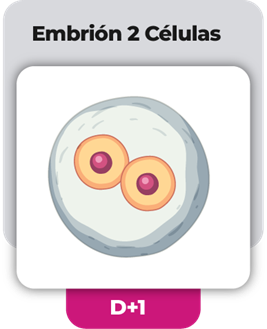
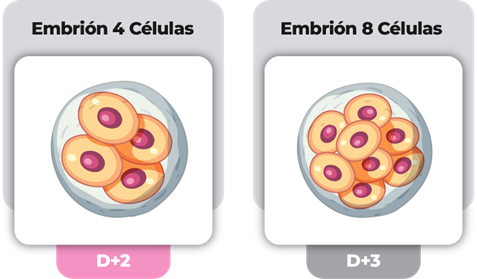
Day 2–3: Cell Mitosis
On days 2 and 3 after fertilization, the formed zygote travels through the Fallopian tube toward the uterus, where the embryo will continue developing (in assisted reproduction, this occurs in the laboratory).
During this journey, the cells begin to divide (from 2 to 8 cells) in a process known as mitosis.
The embryologist will carefully evaluate different parameters such as cell fragmentation, division rate and symmetry.
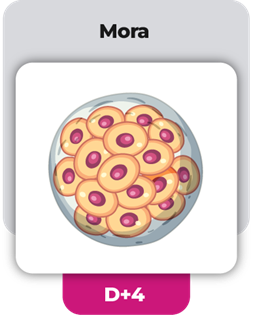
Day 4: Morula
At the beginning of the fourth day of development, the zygote transforms into a multicellular structure known as the morula (named for its blackberry-like appearance). This stage of embryonic development usually lasts about 24 hours before moving to the next phase, the blastocyst stage, acting as a transition.
This cluster of cells will have a similar size and will serve to assess cell quality. Its mission is to differentiate into two groups: the embryoblast (which will give rise to the embryo itself) and the trophoblast (which will become part of the placenta).
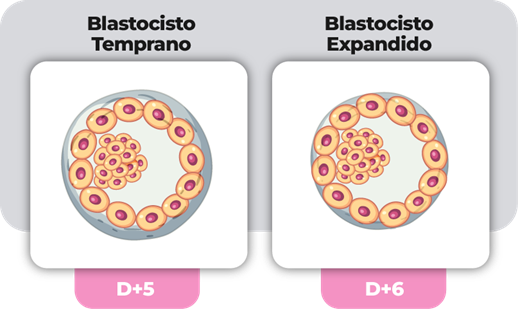
Day 5–6: Blastocyst
The embryo continues its particular process of division, reaching approximately 200 cells at this stage. Two key areas can be distinguished at this stage, and they will determine embryo quality and the real chances of successful implantation in the uterus.
This is the most decisive stage, as the embryo has already overcome possible early developmental blocks. In addition, thanks to the embryologist’s selection, blastocysts show a lower percentage of chromosomal abnormalities or aneuploidies.
From Day 5–6 Onwards
Once the cells reach the blastocyst stage, it is time for embryo transfer or vitrification for future use.
Different studies confirm that success rates are highest at this stage. It is also at this moment when Preimplantation Genetic Testing may be performed, if applicable.
Conclusion of the Embryo Development Stage
Although the embryo development process is quite fast (lasting only six days), it is essential to highlight its importance and the need to rely on highly experienced embryologists to maximize development quality.
OvobankUS is committed to providing patients and partner clinics with cells at the blastocyst stage for direct uterine transfer, increasing the chances of achieving a successful pregnancy.